

Lighting: Natural vs. Artificial (Part 1)
Working under the best lighting conditions possible is crucial if you want to mix correct values, color temperatures and subtle grays when painting. Accuracy in color mixing and perception will depend heavily on the light source that you use to mix and apply paint, so it’s important to consider the options that are available to you.
For most artists, the choices are generally categorized into either natural light or artificial light.

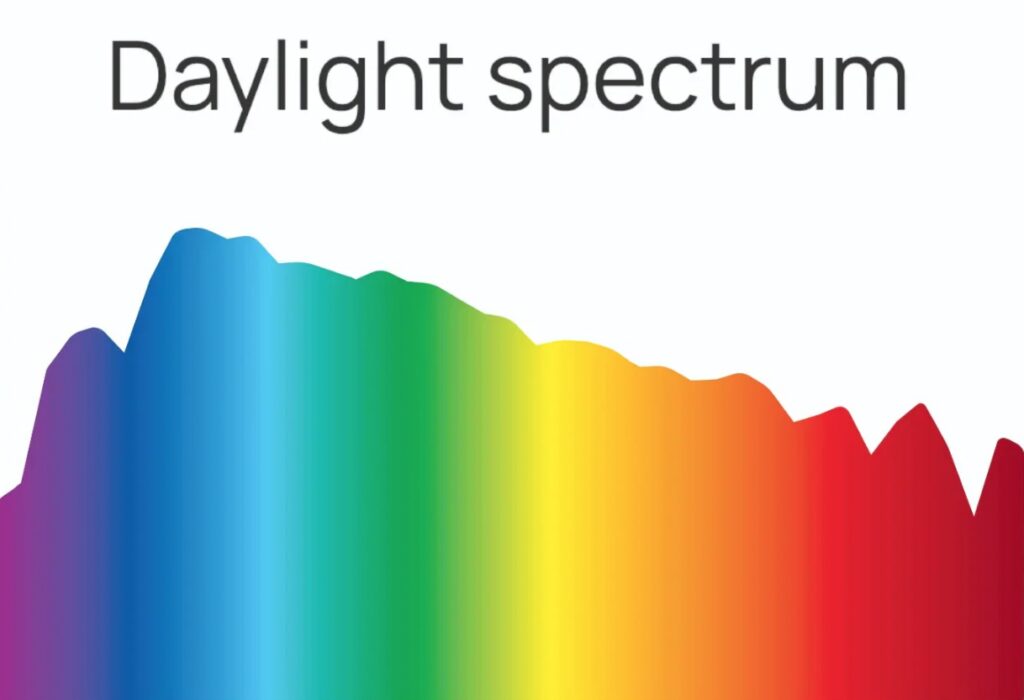
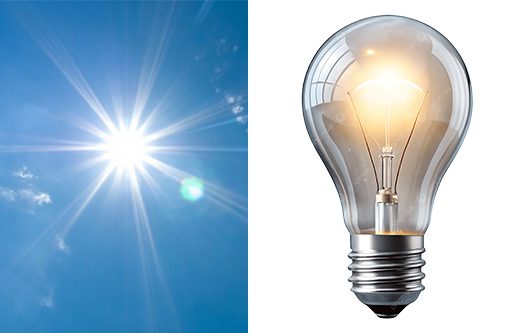
Natural light refers to daylight that occurs around noon each day as a result of the sun. This would include direct sunlight, indirect sunlight that is influenced by the blue sky and reflected light that is being bounced off of the ground at this particular time of the day. Natural light makes use of the full visible spectrum of colors that the human eye can see.

The visible spectrum of colors (Red, Orange, Yellow, Green, Blue, Indigo, Violet)
All colors of the visible spectrum are most equally present around noon each day and it is the reason for using this time frame as a reference when referring to natural light. With a full spectrum of colors available, nature and the human eye mix an endless variety of color combinations to produce the widest possibilities of saturated, subdued and subtle colors that we see every day.
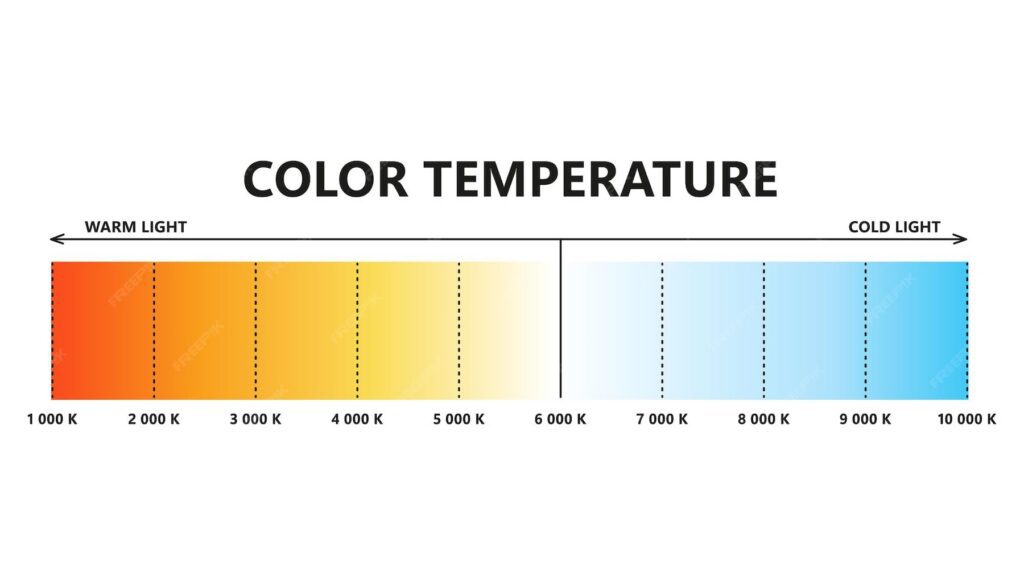
The portion of the visible spectrum that can be seen under a particular light source is measured in different degrees called kelvin (named after William Thomson, aka Lord Kelvin, in 1848). Here’s a chart which shows the different color temperatures in degrees of kelvin.
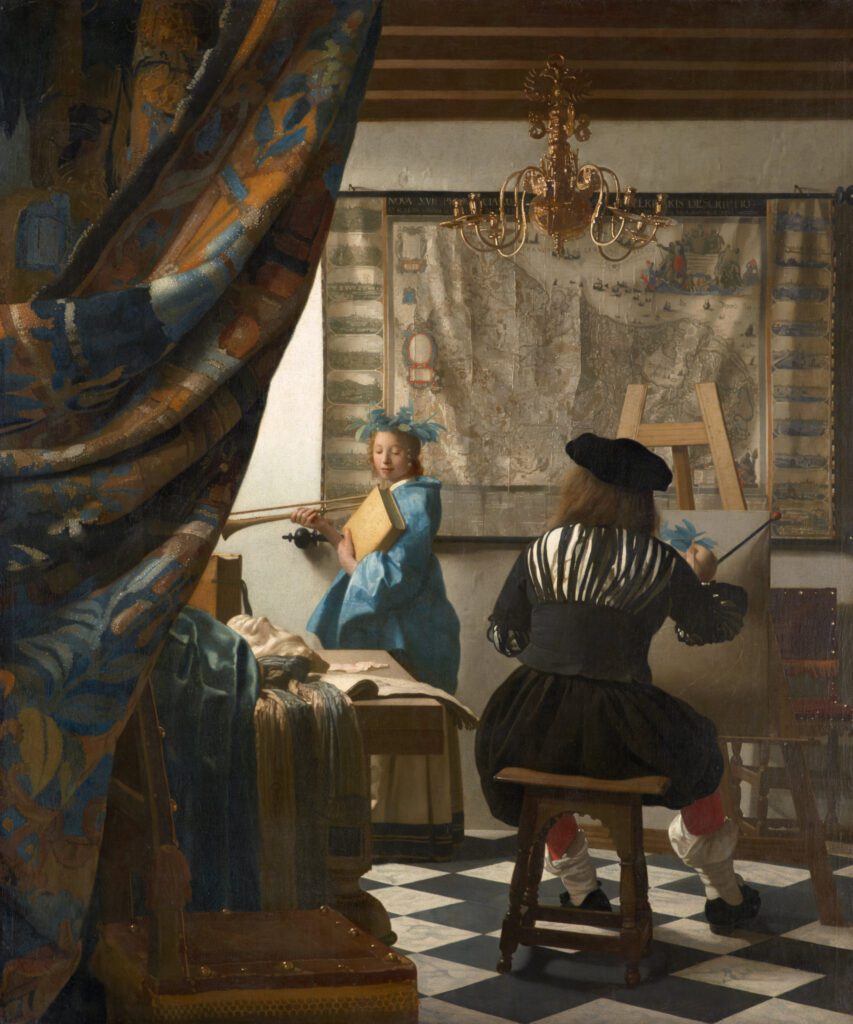
Having said all of that, how does this apply to us, as artists? Well, if you’re wanting to paint under the most accurately balanced visible spectrum possible, then painting outdoors on a clear, sunny day around noon would be ideal. Unfortunately, painting outdoors every day at the same time, with the exact same weather conditions in order to produce consistent results is not possible. Because of this, artists have sought to bring natural light into their studios for centuries. In doing so, they have faced some hurdles along the way. These would include having a natural light source that was consistent throughout the day, the amount of light available to them and the length of time that this light was available.
The first problem of natural light consistency was solved centuries ago by artists who started painting under “North light”, referring to the sun’s position in the sky in relation to the Earth’s Equator. The Equator is an imaginary line that divides the Earth into the Northern and Southern hemispheres and also receives the most direct sunlight on the planet. As you move away from the Equator, towards the North and South poles, the sun’s rays hit Earth at an angle because of its round shape. As a result, the light becomes cooler and more diffused.
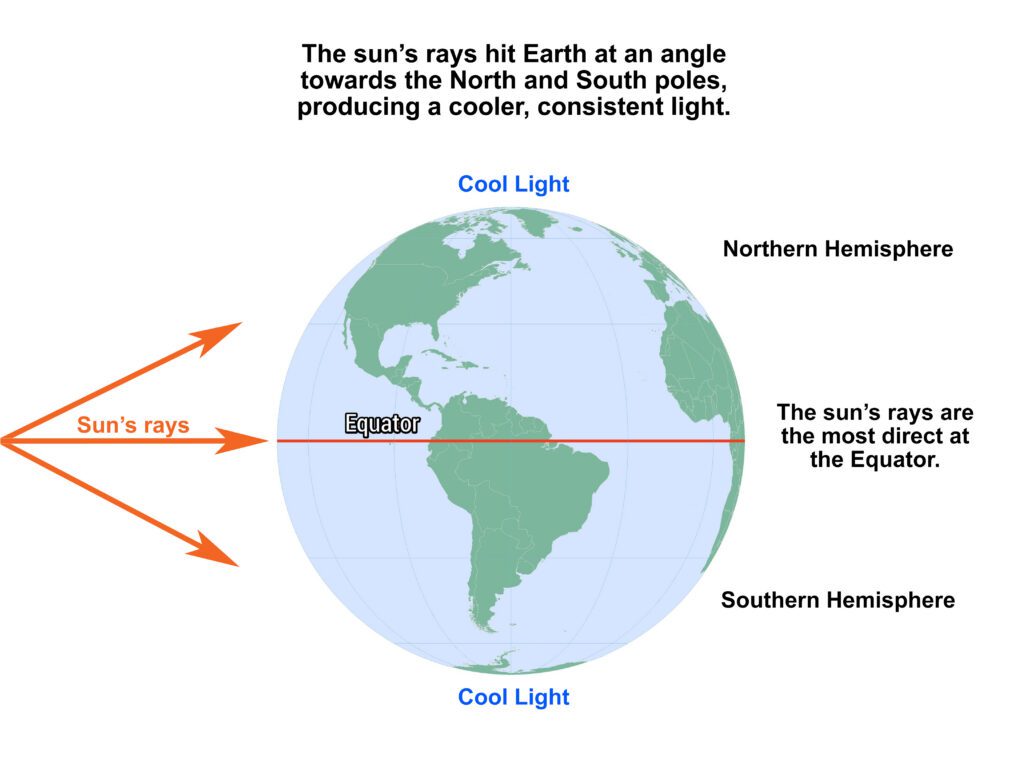
Artists living in the Northern hemisphere discovered that a cool (more blue), consistent light source could be achieved in the studio by having windows which faced towards the North because of how the sun’s rays hit the Earth. The same result could not be reproduced if there were windows facing the East, West or South.
If East or West windows were used, then a constant change in light occurred in the studio throughout the day because of the Sun’s position in the sky and the Earth’s constant rotation. If a South facing window was used, then the result was a constantly changing and overly warm (more yellow) colored light source.
The opposite scenario would occur for artists living in the Southern hemisphere. In that case, studio windows facing towards the South would give the most consistent light results throughout the day.

Although artists found an answer to working under a consistent light source that utilized the full visible spectrum, they were limited to the amount of light that was available to them throughout the day. The reasons for this would be because of outside weather conditions and how many hours of sunlight were available to them. So, if it was a rainy day outside, then the studio may not have as much light to work from or, if it was winter, then the studio may not receive as many hours of sunlight. Because of this, the light inside the studio was heavily dependent on weather and seasons outside of the studio.
While Thomas Edison’s invention of the light bulb later solved the problem of having a constant indoor light source to work from since the late 19th century, it did not provide full use of the visible spectrum from which artists could judge accurate color. As a result, artwork that was painted under artificial lights may not look the same when taken outdoors or seen under different lighting conditions.
Artists who wanted to work indoors needed a solution that would address the limitations of natural and artificial light sources. In short, they wanted the full spectrum of outdoor light to be available inside of their studio whenever they chose to work. While this option was not available to past generations of artists, we no longer have to choose between quality and convenience. Instead, artists can bring the full spectrum of natural daylight into their studio at any time of the day with just the flick of a light switch.