
Lighting: Natural vs. Artificial (Part 2)

Past generations of artists who wanted to work indoors needed a solution that would address the limitations of natural and artificial light sources. Today, the answer to those problems comes in the form of color corrected light bulbs that mimic outdoor light.
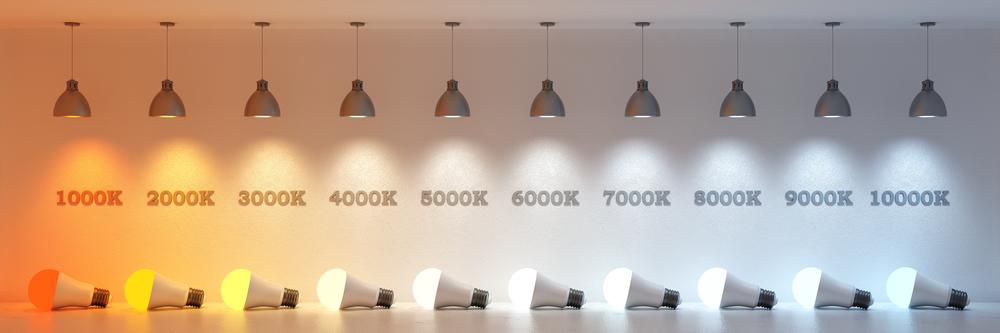
In order to achieve this, the kelvin of the bulb must match the same kelvin of daylight that can be seen outside at around noon each day (between 5000k and 6500k). The lower kelvin number will appear slightly warmer (more yellow), while the higher kelvin number will appear slightly cooler (more blue) in temperature, resembling North light.
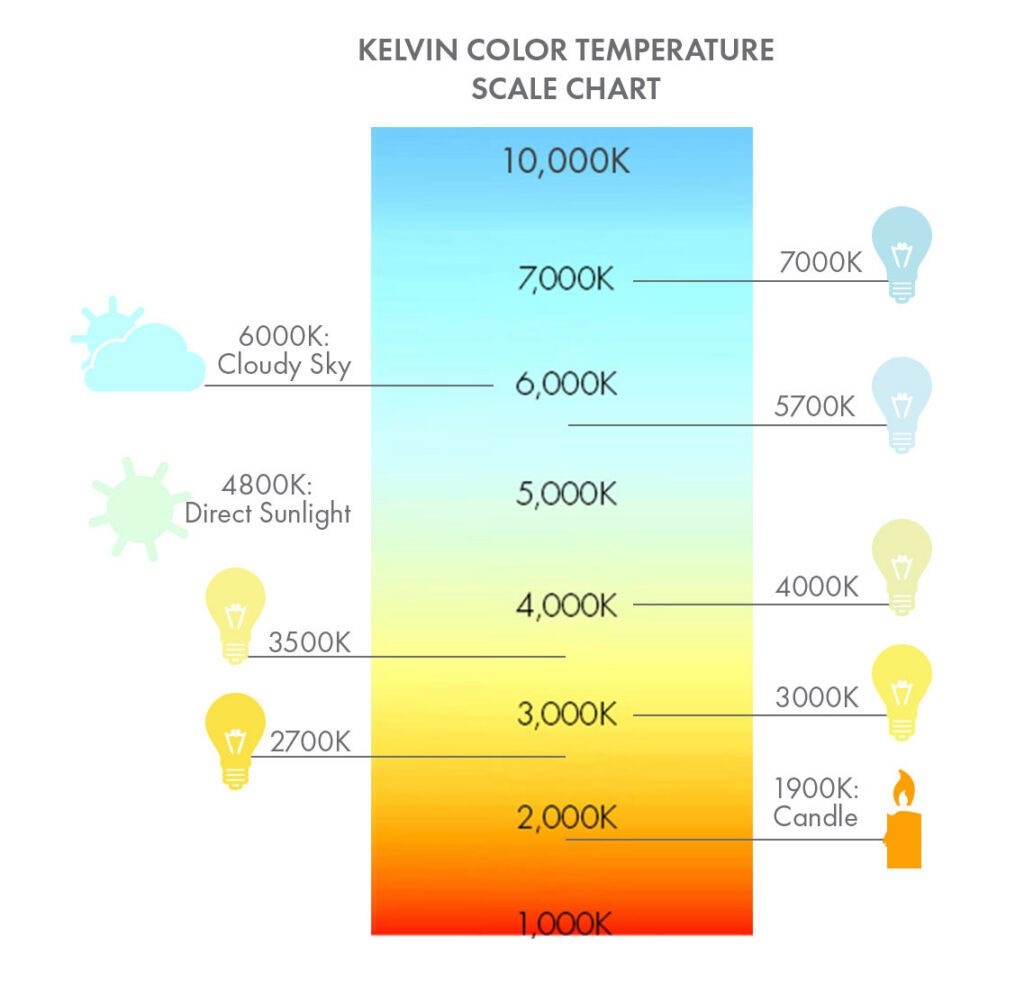
In addition to having the correct kelvin, there are also a couple of other factors associated with color corrected light bulbs that need to be considered when choosing an artificial light source from which you can accurately judge colors. Having only the correct kelvin number does not guarantee that colors seen under that light source will be correct.
This is a crucial lesson that I learned years ago when installing new flourescent light bulbs in my studio. Although I had purchased bulbs that were rated at 6500k, the result was not what I had expected. Instead of seeing beautiful, full spectrum light in my studio which mimicked daylight, I was confronted with a strange, greenish yellow color when I turned on the lights. The kelvin number of the lights that I had purchased was correct, but the colors that I was seeing in my studio were not.
From this experience, I quickly learned that all kelvin rated bulbs were not the same. This is where artificial lighting can get somewhat confusing.
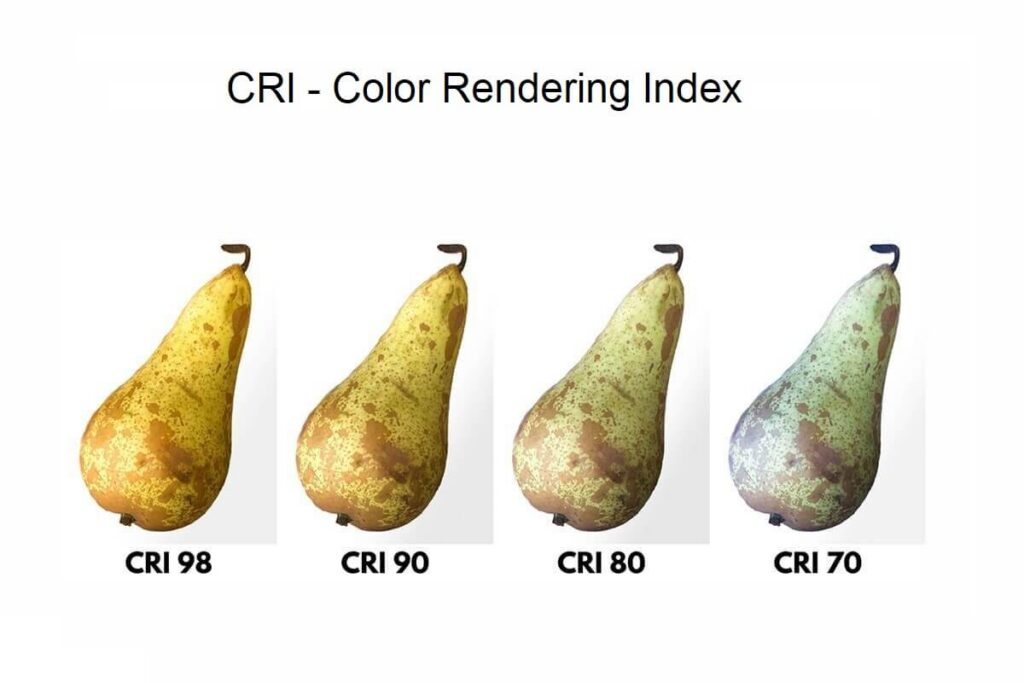
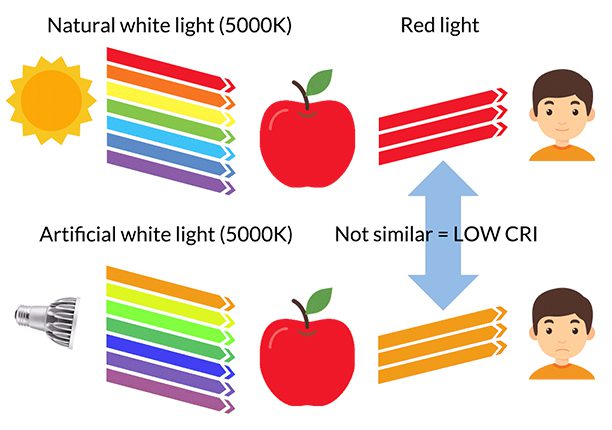
The CRI number (Color Rendering Index) refers to how accurate a color looks when compared to natural light. It ranges from 1 to 100. The higher the number, the more accurate the colors appear. This is the second factor to consider when working with artificial light, in addition to getting the kelvin number correct. As an artist, I wanted to find a light bulb with the highest CRI rating possible. When it comes to color accuracy, a CRI rating of 95 or higher is required.
When choosing color corrected lights for your studio, both the kelvin and the CRI numbers have to be correct within the same bulb in order to mimic daylight.
In addition to these two numbers, LED bulbs not only require a high CRI number for color accuracy, but also a high CRI number that specifically relates to the color Red (referred to as CRI R9). The reason for this is because most manufacturers of LED bulbs purposely reduce the red wavelength in their lights because it makes the bulbs appear brighter. Unfortunately, this also results in the color of the light appearing more green or yellow, greatly diminishing color accuracy. To compensate for this, some lighting companies will add red wavelength technology back into their bulbs for color accuracy.
To keep all of this information as simple as possible, there are three specific numbers that an artist needs to be concerned about when choosing color corrected light bulbs for the studio.
- Kelvin – This number can range from 5000 to 6500. The lower number will result in a warmer (more yellow) light, while a higher number will result in a cooler (more blue) light.
- CRI (Color Rendering Index) – Numbers ranging from 95 to 100 are required for color accuracy.
- CRI R9 (Red wavelength) – Numbers ranging from 80 to 100 are required for color accuracy in LED bulbs.
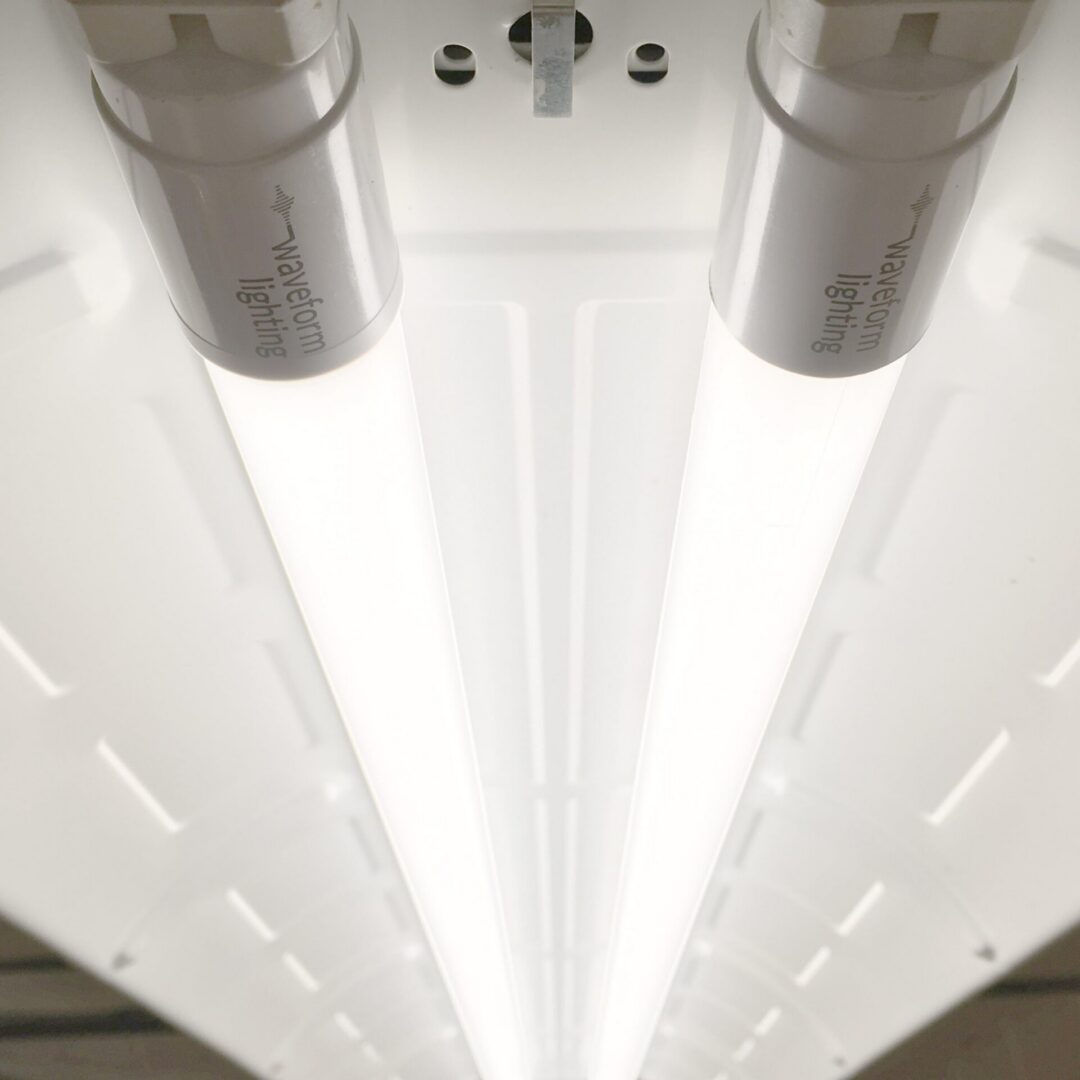
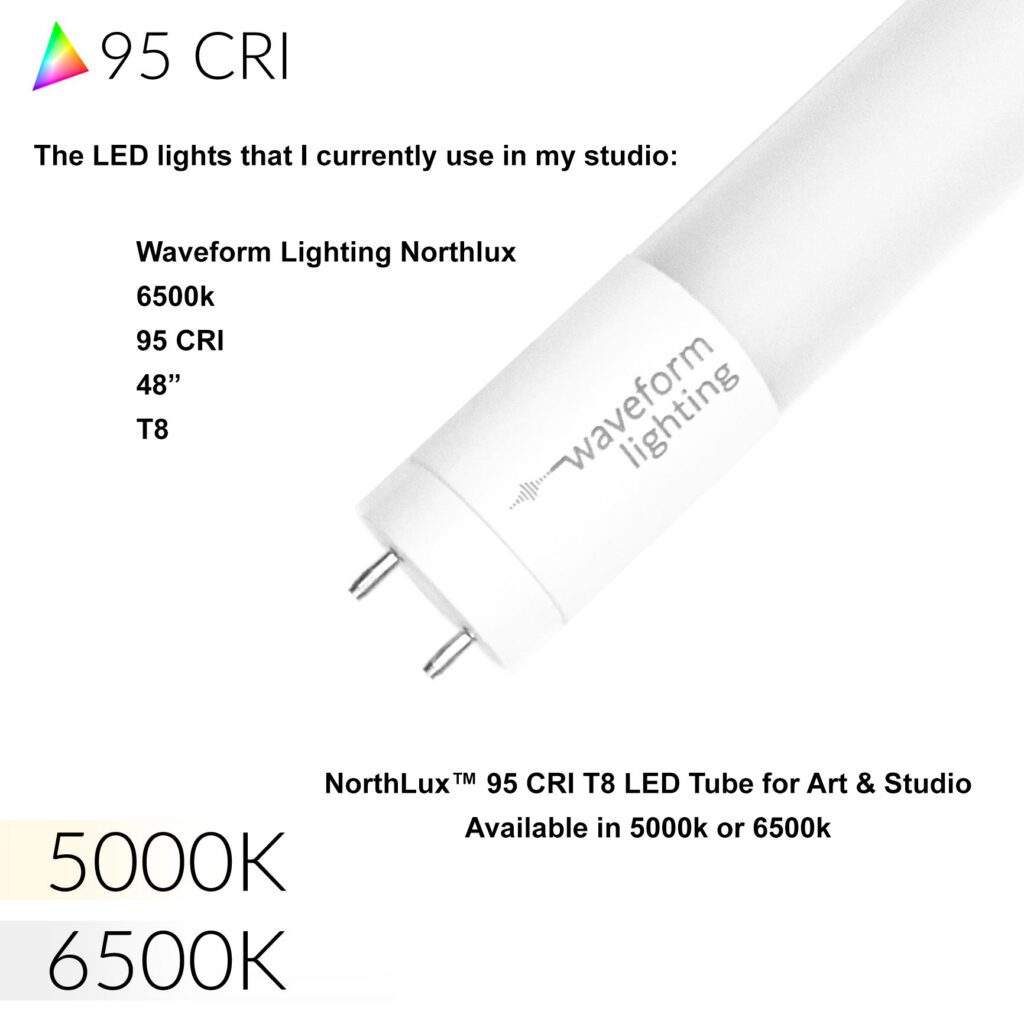
When researching light bulbs that would meet the requirements for producing the best light possible in my studio, I came across Waveform Lighting Northlux 6500k, 95CRI. I’ve been using these LED bulbs over the past year and have been extremely impressed with the color accuracy that they provide. Rated at 6500 kelvin, a CRI number of 95, and also adding additional red wavelength technology back into their bulbs, Waveform has created a well balanced visible spectrum that artists can use to accurately see and mix colors. When all of these numbers are correct, then judging even the slightest differences in color temperature is made possible.
While the path to having color corrected, artificial lighting over the centuries has not been as simple as walking outside at noon or opening a North facing window in your studio, it is now available to modern day artists. The full spectrum of natural light that artists have enjoyed and sought to capture on their canvas for generations can now be brought into the studio at any time of the day with the flick of a light switch.