
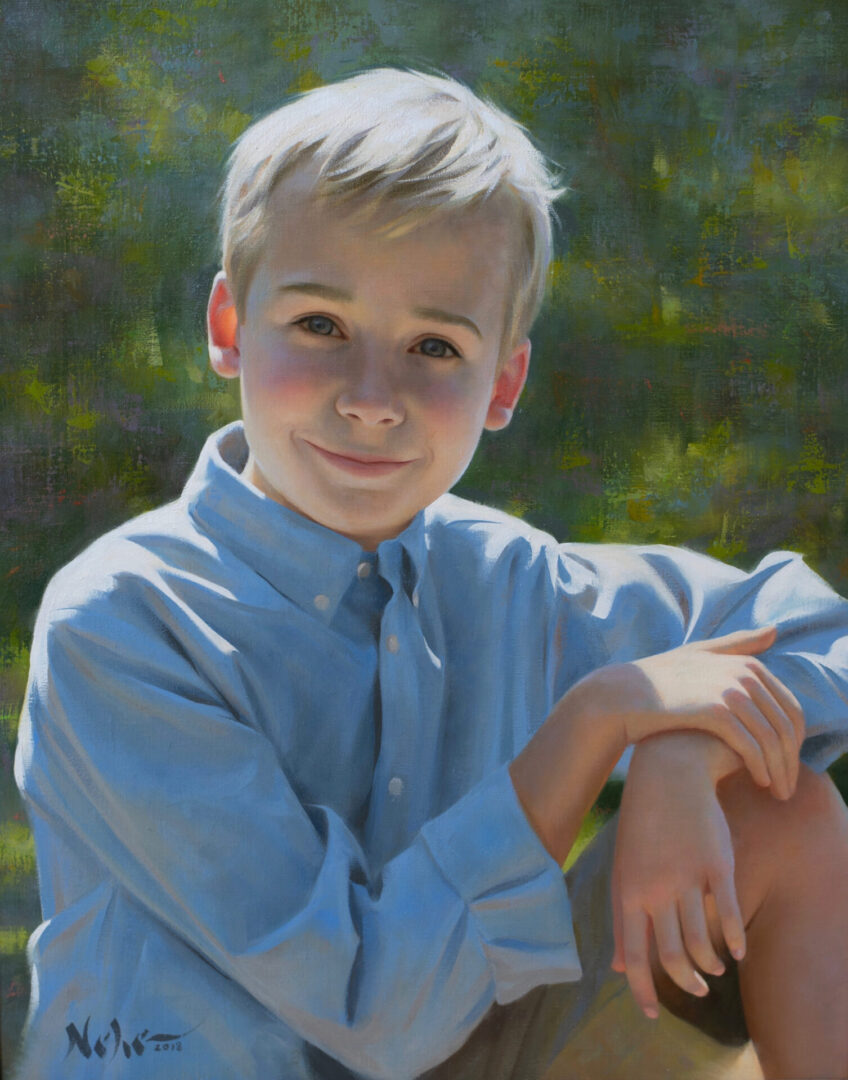
Adjusting the Temperature in Portrait Painting
Accurately forecasting what the weather will be like on any given day is often unpredictable, leaving us at the mercy of factors that are beyond our control. Because of this, meteorologists pay close attention to the ever changing weather patterns that occur in nature in order to help them anticipate what will happen next. Fortunately, we as artists can more accurately predict the temperature changes that will occur in our next painting by paying close attention to where these changes happen most often. In fact, we even have the opportunity to adjust the thermostat to our liking throughout the entire process.
When painting flesh tones, having a balance of both “warm” and “cool” colors helps to create interest and may be just the solution that you’re looking for to infuse more life into your next portrait painting. These color changes often occur in areas where the light meets shadow or when a plane begins to recede away from the viewer, often referred to as the form “turning”. I find it helpful to mix variations of complementary colors in areas like this and then place them side by side in order to help maximize the effect. This also helps to maintain good color harmonies when viewing the painting as a whole.
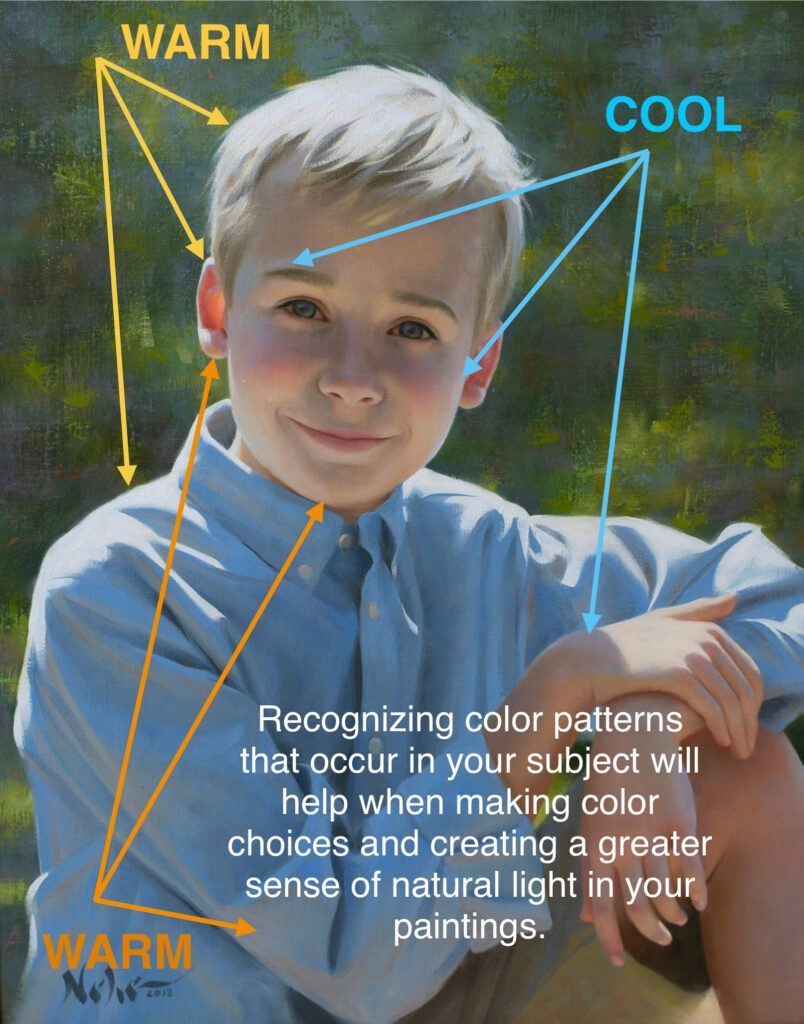
The first step in deciding whether or not your temperature change will be warm or cool depends largely on the light source that you’re working with. If your subject is under warm light, such as incandescent light or direct sunlight, then your shadows will appear to be somewhat cooler in comparison. The opposite effect would occur under a cool lighting situation, such as north light in a studio setting or when working with shadows outdoors.
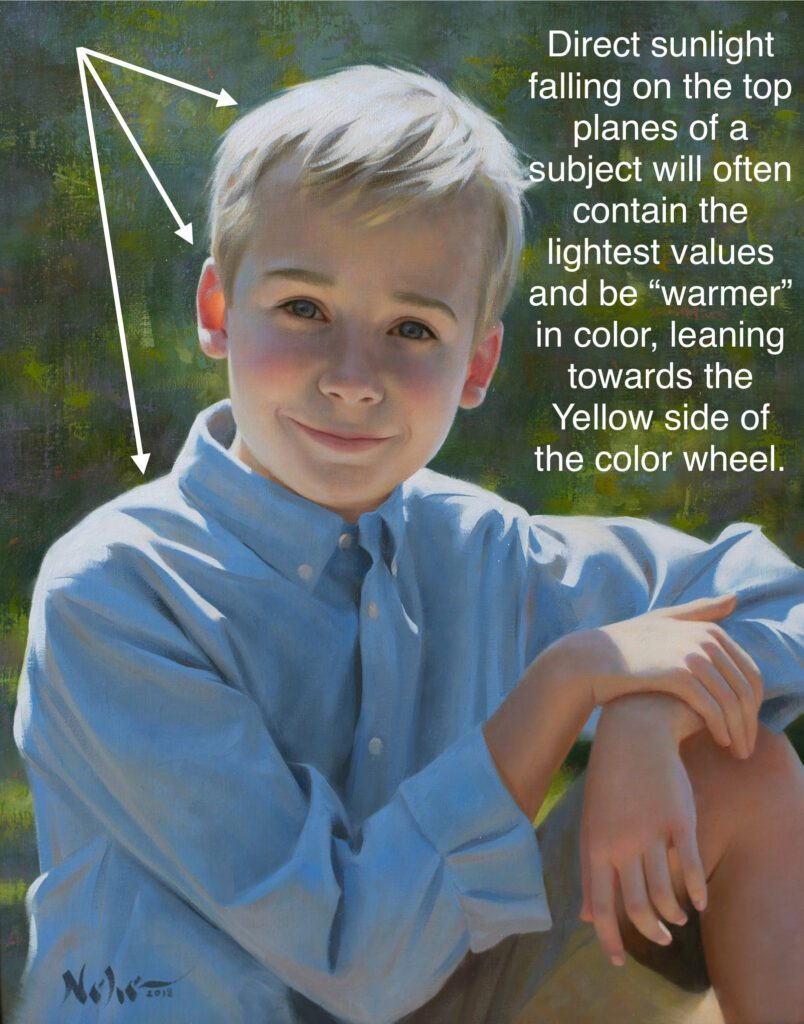
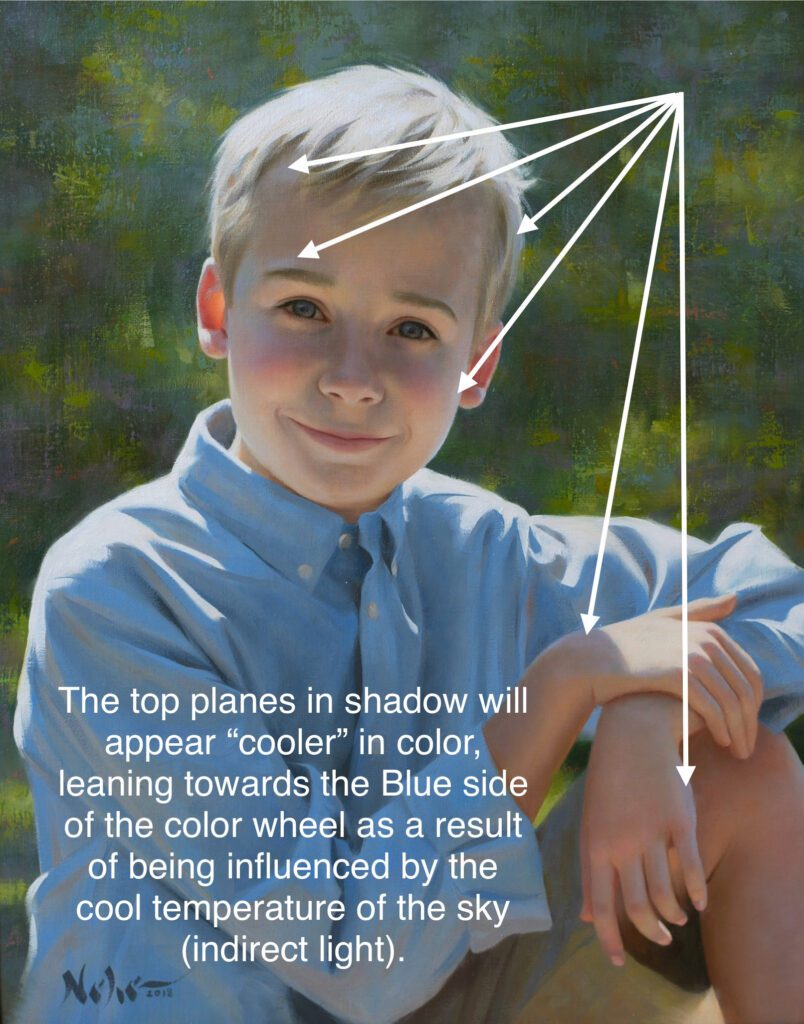
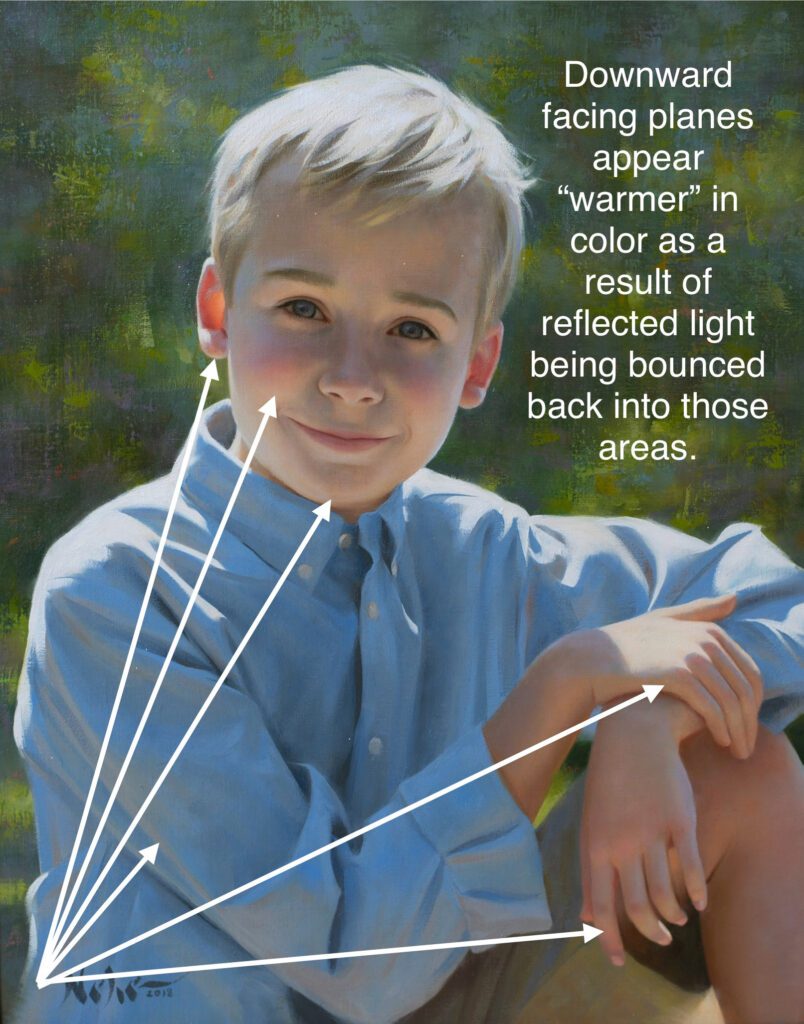
Value (how light or dark a color appears when measured on a scale from black to white) and color work together as a team in order to create a sense of form and a three-dimensional look in your work. Noticing the pattern of values that occurs in your subject, along with temperature changes, can greatly help when making decisions about where to place each one in your painting.
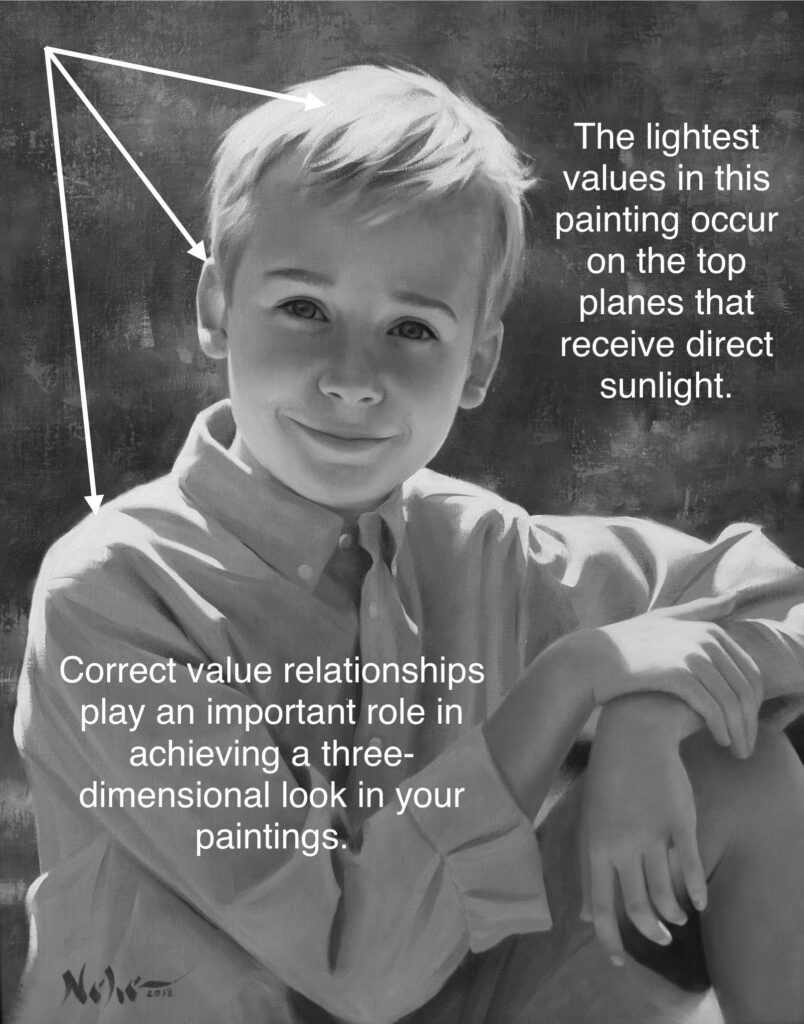
By recognizing and applying patterns that are found in nature, you can find the perfect balance of warm and cool temperatures in your own work, giving the viewer the opportunity to experience art in the most ideal climate possible.